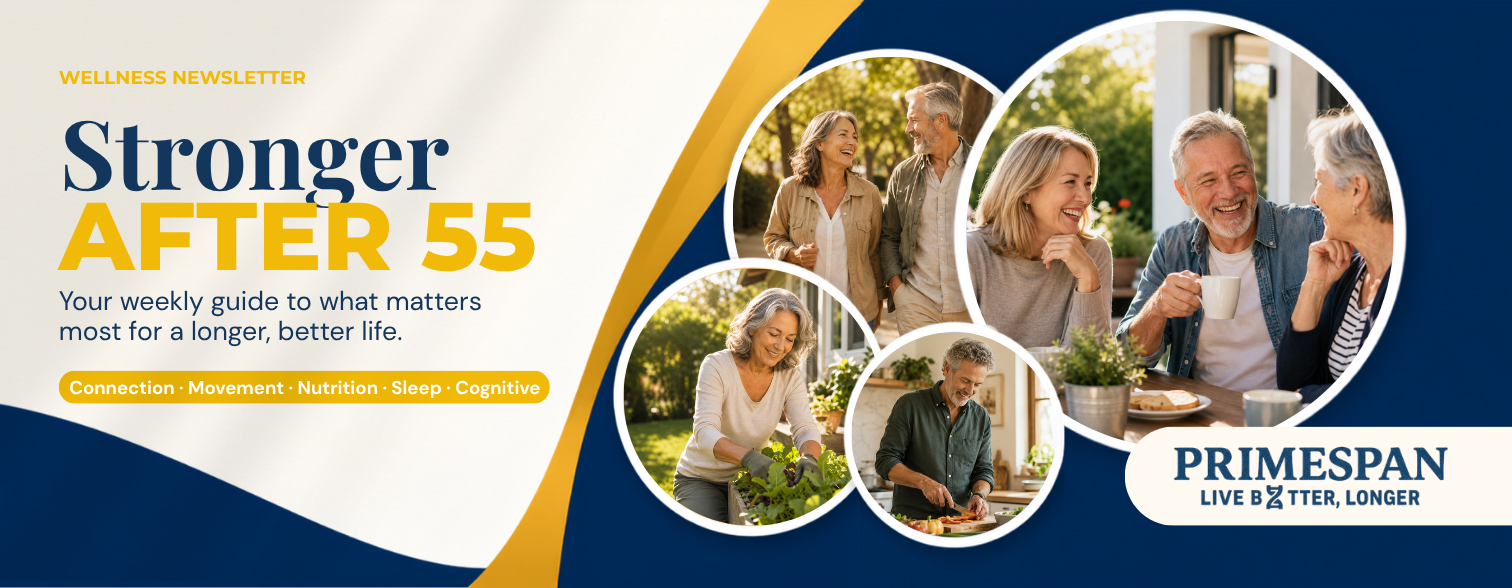
Stronger After 55: NEW YEAR, NEW YOU, NEVER TOO LATE
SECTION 1: TOP CONCERNS & REAL WORLD ISSUES
One of the biggest concerns on the minds of adults 55+ surrounds the uncertainty of their health - not the ones we read in dramatic headlines, but the ones faced in everyday moments. Whether it’s stiffness not allowing joints to “bounce back” like they used to, or the growing list of prescriptions accumulating on the kitchen counter from every doctor’s visit, the rise of chronic conditions is becoming a pressing issue for many older adults. With 93% of adults 65+ diagnosed with at least one chronic condition, and 79% diagnosed with two or more - more and more individuals are struggling to juggle not one but multiple health conditions at once. Yet, these conditions are not the only issue reaching boiling point.
With the cost of healthcare on the rise, medical bills and prescription prices impose a huge barrier when it comes to allowing patients from seeking the care they need, even under insurance coverage. According to the National Council of Aging (NCOA), less than 3% of healthcare money is invested in preventative care despite multiple chronic conditions costing the American healthcare system up to $1 Trillion per year.
The question persists: why do we seek treatment after awaiting diagnosis rather than preventing it?
These matters not only instill a daunting feeling surrounding the idea of “aging”, but creates financial barriers in improving one’s health. However, aging “affordably” is in fact possible. When done with the right steps and small changes in daily lifestyles coupled with healthy habits, aging can be defined not through hospital bills and piling conditions, but through promoting longevity that focuses not only on adding years to life, but expanding the prime years of health one lives in - to truly live rather than simply exist.
SECTION 2: How-To Master Independence With Just 2 Steps a Day
Biological aging brings across many challenges, with one of the biggest impacts starting with muscles. Age-related conditions, such as sarcopenia, can target the loss of muscle and muscle function. Combatting these conditions by turning losses into strengths starts with strength training.
Using resistance training is comparably better than traditional cardiovascular exercises (though highly impactful when the two are coupled) as it not only increases bone and muscle density, but creates efficient metabolism within the body by training it to burn calories even when it is at rest. With higher bone density leading to decreased risk of osteoporosis and fractures, and greater metabolism with maintaining healthy digestive and blood-sugar levels, strength training one’s muscles plays a huge factor in keeping those medical bills down while boosting your independence up.
Yet, strength training alone can’t become the solution to preventing all our muscle problems. Protein-rich foods such as lean meats, dairy, legumes, etc, in a daily diet can build durable muscle in conjunction with strength training – to protect us against chronic conditions while decreasing fall-risk and securing functional independence as we age.
Whether it be 30 minutes of training a day, or small doses of protein in every meal, these small steps create huge changes in progressing longevity and wellness so that you can live stronger, for longer.
SECTION 3: OUT WITH THE OLD, IN WITH THE NEW.
Looking towards a future of brighter health, and a new year of reforms – some old habits need to be cut.
-
EXERCISE IS OPTIONAL.
We’ve all been there before - the mid-night motivational rush to grab a pen and a paper to jot down a new weekly exercise routine to create the stronger, more confident future self we want ourselves to be. You wake up the next morning, and with the business life brings - you skip the gym. Just one day wouldn’t hurt, right? So you skip the next, and the next, until the cycle loops back every single year and we are back to square one.
Why do we do this? A multitude of reasons – but the primary reason being because we set it in our minds that exercise is optional. Without viewing it as mandatory, exercise continues to remain on many people’s list of “would be nice” to-do, when really, it is the biggest factor in ensuring healthy, independent aging. Securing our movement means enabling freedom, and hence, the independent lifestyle many older adults seek in later stages of life.
Debunking this viewpoint starts by shifting this perspective – placing exercise into small habits of our daily routine to make it a “must-do” in order for us to become the strong, confident versions of ourselves as we age with growth, not decline.
-
“IT’S TOO LATE”
Many individuals hold back on starting to create these new changes in healthy habits, and it’s understandable. Life has its ups and downs, with every day bringing new challenges to tackle and more things to do. However, with each day delayed, the risk of developing these chronic conditions and health decline become increasingly prominent - making improvement harder and harder to achieve.
Holding ourselves accountable by starting small - implementing these healthy habit changes slowly but surely is progress in itself. No matter the business life brings, do it for your past self, your future self, and for the present. No change is never too late, nor too little to start making a difference in your life and longevity. Change starts through small steps that lead to big wins, and it starts today.
Responses