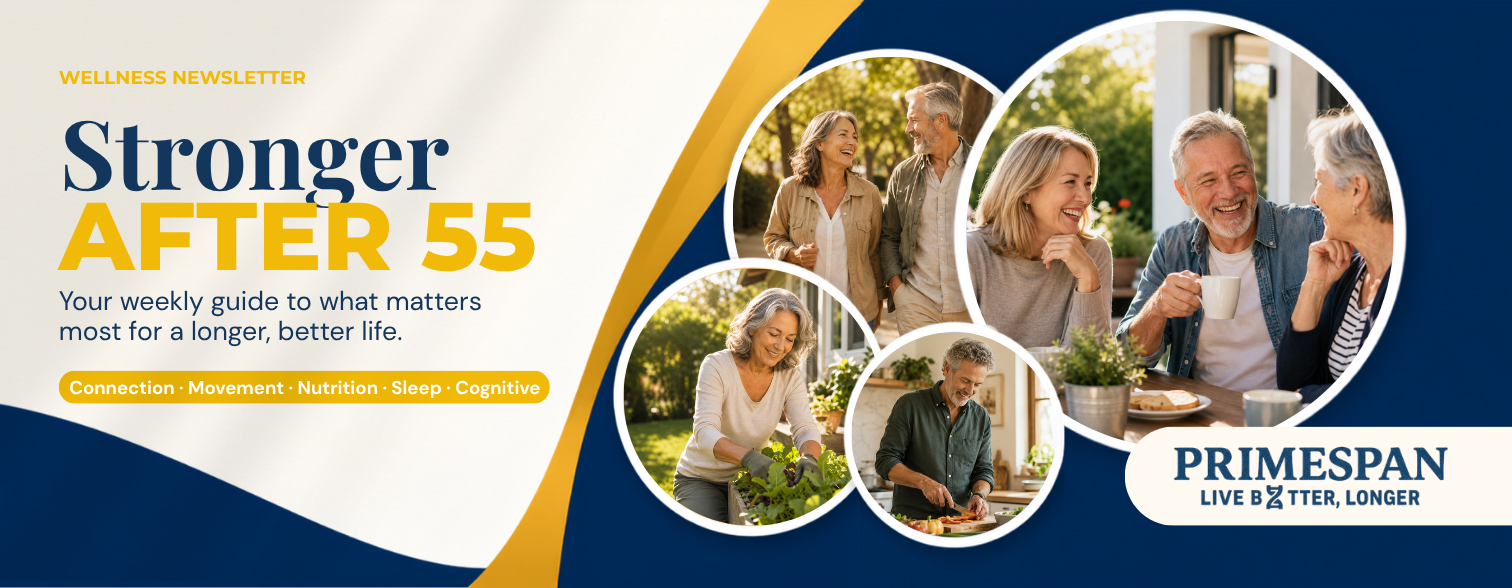
Stronger After 55: Aging Alone vs. Together. Can Mental Health Truly Impact The Years of Our Good Health?
Your weekly guide to help support you in your journey to overcoming health risks, and becoming a brighter, better version of you as you age. This week, we focus on the issue that affects millions of older adults across the world - mental health and its role as a strong social, physical, and longevity determinant - and how we at PrimeSpan can help support you to reach your lifestyle and longevity goals.
SECTION 1: TOP CONCERNS & REAL WORLD ISSUES
Among the many injustices and prejudices individuals face in society, ageism is becoming prominent towards adults 55+. With job markets limiting opportunities for hard working individuals by overlooking their growth and advancement, and lack of urgency in treatment throughout healthcare systems, ageism is taking a toll on preventing older adults from excelling in the ways that they should, and from receiving the respect, and equal treatment they deserve.
However, ageism is one of the causing factors behind the rising rates of depression and anxiety faced by many older adults as they age. Filled with a daunting feeling of losing their social purpose, adults 55+ experience what is known as a “loneliness epidemic”. Isolating themselves from society is a loophole many adults struggling with mental health fall into, shunning themselves away from society and deepening their feelings of loneliness even further.
This plays a huge role in affecting overall aging and longevity decline, with the loneliness epidemic creating a pressing issue in which many are overlooking mental health as “not a real issue”. As overwhelming as it is, mental health is something we should all focus on more as we age, since it can be a huge determinant of cognitive function that can risk factors of cognitive decline and the development of certain neurological conditions like Alzheimer's or Dementia.
The issue is real, but it is time to change the way we think about mental health and take those small steps towards looking at wellness as a primary health determinant in healthy aging. And here’s how:
SECTION 2: MUST-KNOW WELLNESS ADVANCEMENTS
How-To: Boost Cognition & Connection at 55 and Beyond
With rising technology presence in our everyday lives, we tend to underestimate the role social connection can play in slowing down cognitive decline. As discussed in a prior newsletter article, exploring your passions, hobby’s, and interests can be the key to not only enjoying the little things in life that make you happier, but ones that are encouraged by longevity experts. It keeps your mind engaged in doing something you genuinely enjoy, all while decreasing the risk for developing anxiety and depression disorders, and forging meaningful connections with friends, family and community members. There is no limit to how much we can learn about ourselves, and preserving or expanding our identity as we age is extremely important in bonding with a community of support that we can rely on. Us human beings, by nature and evolution, crave the need for social interaction - our brains cannot function properly without it.
With some food for thought, take forward an example of a study conducted by Harvard University on Adult Development. Followed 724 individuals from their stages of adolescence to later stages of their life, the effects of emotional and personal connections with other people boosted their overall health and longevity as they aged. “Social fitness” is just as important as staying cognitively and physically active, with less stress, inflammation-reduces, and strong immunity and cardiovascular health following.
Start finding your connection - whether it be taking on that art class you always wanted to try, or helping out in a local animal shelter - these are the small steps you can do now to reduce loneliness and isolation, and expand your health span as you age while spending time with those who matter most. Laughter is truly the best medicine.
SECTION 3: BEHAVIORS TO BE STOPPED
Ignoring depression or anxiety
Mental health is a sensitive topic that many of us are hesitant when talking about, and feelings of depression or anxiety cannot be dismissed without having critical impacts on longevity in aging. When mental health challenges go untreated, it can significantly reduce the quality of life and increase risk of disability - involving the impacts on our cardiovascular health, metabolic health, etc. Acknowledging mental health challenges is the hardest, but the most courageous step we can take to begin our own, personalized journey to achieving longevity, wellness, and healthy aging. Each one of us deserves the right to live a life full of health and wellness, and part of expanding our primespan of health comes from taking care of our own mental and physical states to the fullest.
We all have different paths to aging, but together we have the power to reach limits, find potential, and become the best version of ourselves as we age. Live stronger, together.
Responses