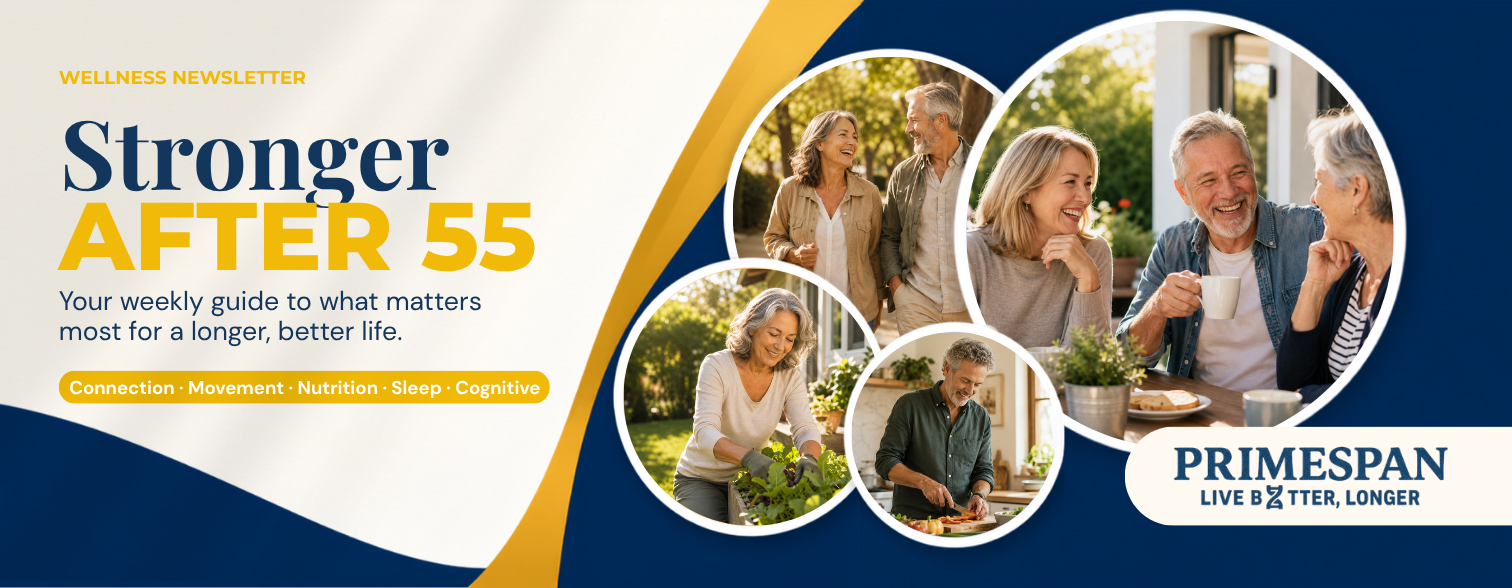
Stronger After 55: Slow, Steady, & Strength. The Aging Mind, Body, and Soul, One Step at a Time.
Your weekly guide to help support you in your journey to combatting the risk for developing age-related conditions, and helping you feel like your prime at 55+. This week’s newsletter covers how we can strengthen an aging mind and body by changing our mindsets on aging, and implementing consistent, small daily habits that create a huge impact when it comes to longevity and wellness.
SECTION 1: TOP CONCERNS & REAL WORLD ISSUES
Throughout most of our life, we are accustomed to getting back up after a fall, believing our pain is short-termed and will wilt away with time, and brushing off the minor injuries we accumulate over time. But when getting up suddenly seems difficult and pain feels ever-lasting, we begin to question how much our bodies have changed over the past years. With the increase of fall rates taking a toll amongst the population of adults 55+, losing mobility and strength remains one of the most overlooked and concerning areas many of us hold when it comes to aging. Our bodies are not used to the changes in fragility and momentum it was accustomed to - and sometimes we blame it off as “inevitable decline”.
That is far from the truth.
It is simply because we have not yet trained our bodies to adjust to the new circumstances aging can bring. It isn’t about “inevitable decline”, but about what we can do now to strengthen our mobility, to regulate activity rather than slowing down, and being able to get off the floor without help. And here’s how:
SECTION 2: MUST-KNOW WELLNESS ADVANCEMENTS
How-To: Strengthen The Aging Mind & Body
Loneliness as a cardiovascular and brain risk
It is true that decline comes with aging, however to an extent. There are many things we can start now to combat the extremity of it – to fight back by training our body to enhance our independence for the later stages of our life. A number one mistake many of us make is embracing loneliness. Loneliness is not “normal”, and it shouldn’t be. Isolation can impact individuals in many ways, from cognitive decline to increasing the risk of developing heart and brain related conditions. The human body is designed to thrive in social conditions by evolution, and without it our bodies deteriorate internally. Neural connections get lost, and mental health becomes challenging. Whether it be a painting class once a week, or zumba sessions every other day, finding time to spend with loved ones, friends, and community members is scientifically shown to decrease your risk of developing a sedentary lifestyle, boosting your immune system, and cognitive health overall - warding off typical age related conditions like dementia, heart disease, strokes, depression, and early death. Laughter is known to add years to your life, and years to our good health - so let’s thrive together.
Protein paired with Resistance Training
However, isolation is not the only thing that can help us boost an active lifestyle both physically and mentally. Nutrition and small, daily eating habits may not seem like a lot, but they can impact our energy levels, mood, and physical health with tremendous impact. Adding healthy proteins to our diet can enhance muscle development and strength, which can be especially impactful once partnered with resistance training. It doesn’t have to mean extreme physical workouts, but consistent, daily steps to train and strengthen our muscles over time. Slow and steady changes in our daily habits can help us achieve our long-term longevity goals – with the power combination of protecting our muscles and overall functional independence as we age boosting the prime years of our health, not decline.
SECTION 3: BEHAVIORS TO BE STOPPED
Believing decline is inevitable
Here’s a question of the day: What is the first thing that comes to your mind when you hear the term aging?
Many describe the slow movements of life, others describe the aches and pains aging brings with it. A good majority of us are accustomed to believing that aging MUST mean decline. We tend to let go of ourselves after a certain age simply because of this mindset – and that needs to change.
Decline comes with aging, but it is not inevitable unless we shift our perspective on aging. With a strong mindset, and a willingness to create change in our own lives, aging should come with the expansion of our wellness – an extension of the good years of our health.
Aging should not be a burden, nor one full of pain - but one embellished with strength, courage, and prime.
That shift, starts with you.
Responses