

STRONGER AFTER 55:Why Balance is the Ultimate Currency of Independence After 55
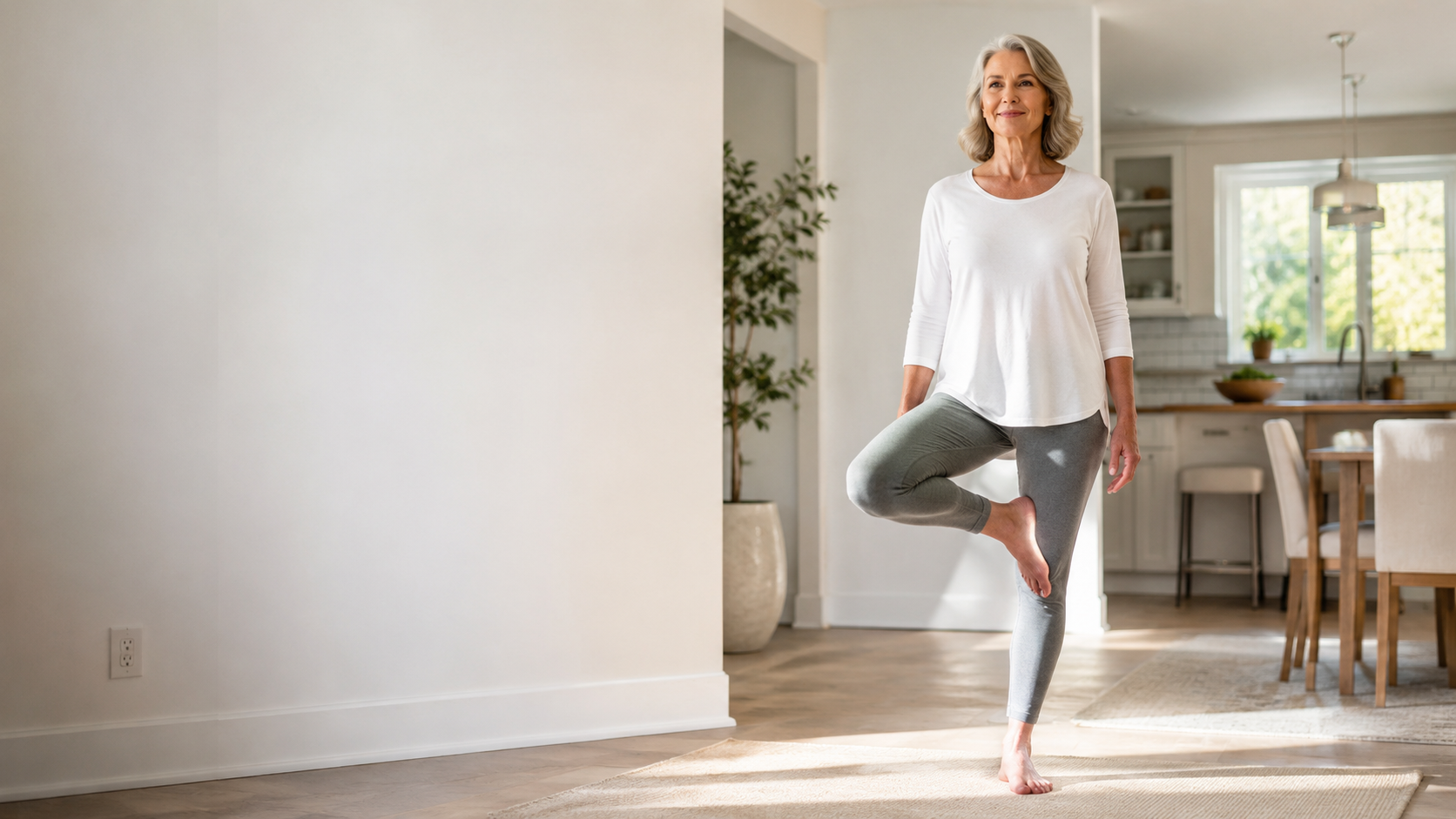
We often treat our fitness like a collection of data points: heart rates, step counts, and the weight on the barbell. Yet, beneath the metrics of strength and cardio lies a quiet moderator, the invisible engine of every ambitious move we make.
Balance is the unsung architect of a vibrant life. It is the difference between navigating the world with a sense of fluid agency and moving through it with a growing, silent hesitation. While we spend decades focusing on the power of the engine, we often neglect the steering.
To choose balance is to choose "Steadfast Independence"—a way of living where your physical stability matches your internal ambition.
The Long-Term Portfolio: Investing in Your Future Self
Traditional wellness messaging often relies on the "loss-frame"—the scary language of fall prevention and injury avoidance. But a sophisticated approach to longevity shifts the narrative toward gain. According to the PrimeSpan Balance Guide, balance training is not a defensive maneuver; it is a proactive investment in your future self.
Fall prevention messaging often triggers a fear response, which can paradoxically lead to a contraction of activity. By contrast, framing stability as an investment triggers an agency response. You aren't just avoiding a mishap; you are securing a "dividend" of mobility that allows you to remain the protagonist of your own life a decade from now.
"Your Future Self Needs Balance Training."
When you prioritize your equilibrium today, you are essentially buying back your time and freedom for tomorrow. It is the ultimate insurance policy for an active lifestyle.
The Psychology of the Steady Path: Confidence as a State of Being
There is a profound, kinetic link between physical stability and mental confidence. When you feel unsteady, a layer of "cognitive static" enters your daily life. You begin to scan the pavement for cracks; you hesitate at the threshold of a crowded room. Your world, quite literally, begins to shrink.
Steadfast Independence is the emotional freedom to engage with the world without that underlying static. The PrimeSpan philosophy positions independence as the direct result of physical steadfastness. When you trust your feet, your mind is free to focus on the conversation, the scenery, or the destination, rather than the mechanics of the journey.
The Architecture of Autonomy: Mastering Stairs and Strides
The mastery of daily movement is where the philosophy of balance meets the reality of independence. Autonomy is often won or lost in the seemingly mundane transitions of a typical day.
The Rhythms of the Gait Walking is more than just a means of travel; it is a complex coordination of weight shifts. Maintaining a confident gait ensures that uneven cobblestones, crowded airports, or sandy paths remain invitations to explore rather than obstacles to avoid.
The Vertical Frontier Navigating stairs is perhaps the most critical skill for long-term home autonomy. The ability to move between levels with ease is what allows you to stay in the home you love. It transforms a staircase from a looming risk into a simple architectural feature of your environment. By reclaiming mastery over these movements, you ensure that your world remains as large and multi-leveled as you desire.
From Risk to Roadmap: The Literacy of Stability
We need to redefine "fall-risk awareness." Instead of viewing it as a clinical warning or a source of anxiety, we should treat it as movement literacy—a "GPS" for your physical trajectory.
Awareness is data, and data is empowerment. When you understand the mechanics of your own stability, you are no longer a passive passenger in the aging process. You become a proactive manager of your own performance metrics. Having the tools to mitigate risk isn't about living cautiously; it’s about having the preparation necessary to live boldly.
The Simple Habit: Starting the Conversation
The path to a more stable future begins with a single, sophisticated habit: initiating a dialogue with a professional to establish your baseline.
Rather than guessing at your needs, consult a doctor or a fitness professional about a balance-specific routine tailored to your lifestyle. To ensure the conversation is productive and personalized, move past the basics and ask these punchier, trajectory-focused questions:
-
"What does my baseline balance tell us about my mobility trajectory over the next ten years?"
-
"What is one simple, daily balance habit I can integrate into my morning routine that safely challenges my stability?"
-
"Based on my current gait and posture, what specific stability 'leaks' should we address to maintain my independence?"
A New Trajectory for Longevity
Prioritizing balance reshapes the entire experience of aging. It transforms the later years from a period of cautious contraction into a time of continued exploration and steadfastness.
When you invest in your equilibrium, you aren't just staying upright; you are staying in the game. You are choosing a trajectory where your physical capabilities continue to support your life's ambitions, rather than limiting them.
Envision your life six months from now with total confidence in your physical stability. Where would you go? What activities would you reclaim? What adventures would no longer feel "too risky"?
Step into a future of Steadfast Independence. Consult with a professional today to begin your PrimeSpan balance journey.


 |
Primespan App - App Store Download Primespan by Primespan on the App Store. See screenshots, ratings and reviews, user tips, and more apps like Primespan. apps.apple.com |
|

Responses